Turnout has been high and dialogue heated at public meetings held
lately in Burlington and environs. On a recent Monday, for instance, dozens of people both
in favor and opposed to a proposed health access buffer zone at Burlington
reproductive health care centers brought their arguments and deeply held beliefs
to the City Council. On the same night dozens more Vermonters showed up nearby in
South Burlington just to watch the City Council, in a 4-1 vote, reject a plan
to base F-35 fighter jets at the airport. I missed that, but I was was there a week earlier…
Noises Up… It was the most dramatic local showdown thus far this season.
More than 300 people gathered at the high school in South Burlington for an Air
Force public hearing on the environmental impacts of the multi-purpose F-35A,
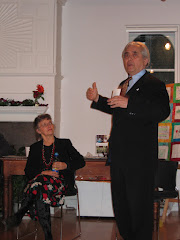
the military’s most expensive pet project yet. It was civil -- but intense -- as Vermonters talked passionately about military pride, damaged neighborhoods endangered jobs and rising noise for over two hours. The lighting was spooky. But the testimony – a dozen people appear in the scene above – was often compelling.
More than 100 residents showed
up at Burlington High School a few days before that to speak their minds about
racial inequality and harassment in the schools. Some were calling for
Superintendent of Schools Jeanne Collins to resign. Tension had increased since
the release of a diversity, equity and inclusion plan, its rebuttal by a math
teacher, and protests outside the high school. This scene captures several statements, plus a
confrontational moment involving one leading Somali student. Collins has issued a
public apology but says she does not intend to step down.
From my place it’s a short walk up the hill to UVM….
Part of my job for VTDigger is to cover some of the region's large institutions. The University of Vermont certainly qualifies. More than 10,000 students and half a billion annually in expenses and revenues. “You can see the analogy with
the banking industry,” lamented John Bramley at one point during the recent Trustees meeting. What he meant was that large
institutions have economic advantages, and also that a university education could
again “become the preserve of the wealthy and the privileged. Temporarily
promoted last year after the tumultuous departure of President Dan Fogel, he delivered the news forcefully in final
remarks before the arrival of a new president, lawyer and former University of
Minnesota Provost Tom Sullivan.
Bramley sounded like he was borrowing from the Occupy movement. In this scene Provost Jane Knodell also defends the university's strategic
plan. It ends with a brief look at financial aid that might not put you to sleep. For more details check my articles on UVM, race in Burlington and the F-35 debate at VTDigger. But now some drumming and few last words....
Yes, there's a lot going on. But that's no excuse to neglect the Maverick Chronicles. Hope you enjoy these scenes. On the other hand, sometimes you have to
just kick back, watch and listen. So, I’ll end this installment with a rhythmic take on opening day at the Farmers’ Market in City Hall Park. It was lovely
and the dancers were terrific. If you’ve come this far and especially if you sampled the earlier scenes, don’t skip the climax. It's worth it. Dissent without music, food and laughter would not be worth all the trouble. Just saying...
Three progressive mayors managed Burlington for 29 of the 31 years
after Bernie Sanders’ first win. Although Democrats continued to dominate the
City Council during most of that time, and a Republican candidate for mayor
could still win, a multi-party political system had changed the shape and style
of city government, and, beyond that, fundamentally altered Vermont’s political
landscape.
-- From the Introduction
^^^
Burlington's historic 2012 mayoral race lasted six
months. But in the end it took only half an hour after the polls closed to find
out who won. For the first time in
three decades Democrats took control of City Hall. Written in the heat of
that campaign, Progressive Eclipse explores the recent struggles of
the most successful progressive movement in the last half century.
In 1989 Greg Guma's book, The People's Republic: Vermont and the
Sanders Revolution, described the rise of Vermont's progressive movement.
Much has changed since Sanders moved on to Congress, and economic and political
pitfalls have created new challenges. Putting local politics in a larger
context, this new e-book also explores the early impacts of the Occupy movement
and the campaign to overcome the Supreme Court's Citizens United decision.
But the main focus is the hotly contested mayoral race between housing
developer Miro Weinberger, Republican Kurt Wright and Independent Wanda Hines.
Progressive Eclipse takes a sympathetic, yet
critical look at why local progressives found themselves on the defensive
despite an impressive record of success, examining developments like the controversial decision by Sanders and Mayor Bob Kiss to invite military contractor Lockheed
Martin to Vermont, as well as financial problems that emerged after
Burlington launched a municipally-owned cable TV and fiber optic system. It
also examines the impressive record of three Progressive administrations, and
chronicles the twists and turns of the race that resulted in Weinberger's
decisive victory.
As Greg Guma explains, an eclipse doesn't mean the
end of anything. But this one does raise thorny questions about
progressive politics in Vermont and across the country.
The 189-page book is now available for $4.99. To download a free sample, click on
the link below:
TOP STORIES: The Singing Governor (1:17) Protesting Racism (5:45) Equity and Race: A City Hall Forum (9:59) MAVERICK CHRONICLES: Progressive Eclipse (7:53) The Next Frontier (5:49) SIMPLE DOMESTIC AT HIGHER GROUND: Broken Down Baby (5:57) Expectations (4:16) Hard Heart (3:35) Nothing Compares 2 U (2:42) BURLINGTON BEAT: Last Words (9:57) State of the City (9:22) Rising Crime: Neighborhood Forum (9:54) Welch on Student Loans (5:12) Geothermal in Vermont: Sanders Briefing (8:20) Cowbell Time Has Come (9:57) DOCUMENTARIES: Moving Toward Freedom (8:31) Odyssey (4:16) Family Ties (5:56)
^^^
Created by Greg Guma As seen on VTDIGGER.ORG
It’s not perfect. It’s real.
$10 for the limited edition DVD collection. Email MavMedia@aol.com for details.
May 2,2012, 6 pm
The William Bross Lloyd Jr. Lecture
Celebrating the 60th Anniversary of Toward Freedom Program of African Studies, 620 Library Place, Evanston, Illinois
Prof.
Horace Campbell, Syracuse University
with
introductory remarks by Greg
Guma, former TF Editor
Sixty years ago at the
height of the Cold War William Bross Lloyd Jr launched the newsletter Toward Freedom, one node in a network of international
activists that has carried the vision of a world ethic that
honors the human spirit and the right of individuals to freedom of thought and
creativity.
This 60th anniversary
lecture will focus on the seismic changes in
International politics since the uprisings in Tunisia and Egypt in
January 2011. Drawing from the inspiration of the youths of Tahrir
Square Professor Horace Campbell will interrogate the call from Samir Amin to be audacious in conceptualizing alternatives to the political
and economic dominance of the ruling one per cent.
Campbell will
reflect on the rapid economic growth in Africa and the implications for the
Union of the Peoples of Africa in the changed world economy. In order to
heal the planet from rapacious forms of economic relations and exorbitant
consumption it is necessary to embark on a new system that enables equality and
mutual understanding. Hence, there must be a quantum leap from the current
neo-liberal system to a new social system that is not based on discrimination
and hierarchies. Drawing from the present thrust for Reparations and
Reconstruction toward a multi-polar world, the lecture will examine the
multifaceted transformations necessary to rise beyond the linearity and
concepts of ‘modernization.’
The talk will
challenge intellectuals in the academy to transcend old images and ideas of
Africa with the call for boldness in formulating political alternatives to the
existing system. A “humanist consensus” rather than a Washington, Beijing, or
any other kind of consensus, is now necessary to work for world peace in a
moment of crisis when the triggers’ of war are poised to engulf humanity into
greater conflagrations. In this quest centers of learning will be encouraged to
join the new process of re-education to break the dominance of the exploiters.
The Speakers
Horace Campbell is
Professor of African American Studies and Political Science at Syracuse
University in Syracuse, New York. He is the author of Rasta and
Resistance From Marcus Garvey to Walter Rodney; Reclaiming Zimbabwe:
The Exhaustion of the Patriarchal Model of Liberation; and Pan
Africanism, Pan Africanists and African Liberation in the 21st century. His
most recent book is Barack Obama and 21st Century Politics: A
Revolutionary Moment in the USA.
Greg Guma met William B. Lloyd in the 1970s, succeeded
him as editor of Toward Freedom in 1986, and helped to bring
the organization to Vermont. He served as editor for more than a decade,
expanding the publication's scope from the end of the Cold War to the start of
the digital age. In Burlington, the state’s largest city, TF found a second home that has nurtured the publication and its
educational work for the last 26 years.
Greg's introduction will feature a new documentary (see above) examining the events surrounding the launch
of Toward Freedom as a Chicago-based international newsletter,
the legacy of the Lloyd family dating back to Henry Demarest Lloyd, and the publication's accomplishments over 60 years. In person he will also recount TF's early
coverage of colonial struggles and the non-aligned movement, writing by Lloyd
and others on independence movements, and
the relevance for our time.
As most students went to classes at
Burlington High School on Thursday morning about 40 students, most of them English
language learners (ELL) from Somalia, gathered at the school's entrance for a surprise protest.
Angered after seeing a newspaper article posted
on a school bulletin board that described them as “statistical outliers” who
lagged behind, they overcame embarrassment and delivered their message with youthful
energy and creativity. They feel unfairly judged by outdated tests and object
to statistical analysis that correlates poverty with poor academic performance.
They also made it loud and clear that,
despite any progress or the promises of change ahead, racism remains a real and
persistent problem in local schools.
Their goal, chanted while marching around
school property, was to “end racism at BHS.”
^^^
When the findings of the Diversity and Equity Task Force
established by the Burlington School District were released last October Vince
Brennan was almost as optimistic.
As Task Force Chairperson and a Progressive member of the City
Council he saw in the year-long effort the “noble ideal of building a better
future.” Six months later what he sees instead is “fear and a loss of hope for
change.
Last Monday, during the city council’s first working session with
the new Weinberger administration, he had some strong words for BSD
Superintendent Jeanne Collins after a report was delivered by school officials
on the new strategic plan for diversity, equity and inclusion.
In a commentary submitted to the Burlington Free Press in late
March – but not published – Brennan questioned whether Collins was “really
being true to her words about free speech or is picking and choosing who to
silence.”
Councilor Vince Brennan
The school system needs “new leadership,” Brennan concluded. He
was calling for the superintendent’s replacement because she had declined to
intervene after Math teacher David Rome issued a pointed refutation of the
report’s findings.
Brennan’s commentary was written in response to a Burlington Free
Press op-ed that said he was wrong to criticize Collins for not speaking out
about Rome’s rebuttal. The teacher’s questioning of statistics and conclusions
cited as the basis for the school system’s strategic plan undermined the
report’s initial public reception and has raised fresh questions about racism
in the schools.
Brennan insists he does not want to silence Rome, despite
suggestions in the press that it is a free speech issue. But he does think that
“not participating with the Task Force while it was assembled and then
condemning the whole process after it was accepted is exercising what
researchers call ‘privilege’ based on race.”
Disparities and disagreements
Schools in Burlington are considerably more diverse than most in
Vermont. Students of color—Asian, Black, Latino, Native American and
Multiracial—make up 27 percent of student body, according to school district
figures. About 15 percent are English language learners from other countries.
Over 60 languages and dialects are spoken by their families. Statewide, the ELL
population has more than doubled in the last ten years.
Minorities will be more than 50 percent of the US population by
2042. Although the white community may be able to maintain the status quo, the
report argues, doing so will create “an inhospitable climate for students and
families of color and will severely limit the potential of all our students to
succeed in a rapidly changing environment.”
With these and other trends in mind the Task Force attempts to
make the case for rapid change with a portrait comprised of “statistically
measured facts” about the local system. The report states, for example,
that the dropout rate for African American students is measurably higher, that
“students who are eligible for free and reduced lunch” are 25 percent less
likely to graduate, and that “there is nearly a one in five chance that an
otherwise qualified student of color did not take the SAT or ACT exam.”
It also notes that minority students “are extremely
over-represented (60%) in being punished through out-of-school suspensions,”
and although students of color make up 27 percent of the student body, they
represent only 13 percent of those passing Algebra 1.
The strategic plan that has emerged from this analysis involves
top-to-bottom change in educational policies. That includes ongoing training
and professional development for all employees, hiring more people of color
along with “culturally competent” staff, leadership and accountability by the
school board and administration, increased transparency, and incorporation of a
“multicultural mindset” into curriculum, hiring and other policies that “values
cultural pluralism and affirms students from all backgrounds.”
In a section on what needs to be done during the next year to
change the local climate, the primary objective is to “infuse the district with
the message that the social and educational climate in our schools requires
urgent attention to erase many negative stereotypes, subtle and overt
behaviors, assumptions, and decisions that favor conventional, white upper
middle class Judeo-Christian values and beliefs.”
Rome’s response focuses mainly on statistics he has found
inaccurate, but he also calls the report’s references to Judeo-Christian
culture inflammatory and divisive. “The use of this phrase is truly an insult
to the professionals who work with individuals at BHS to make the school as
inclusive and welcoming to as many students as possible,” he writes. At least
one other teacher has publicly agreed with him.
Rome’s central argument is that factual errors in the report have
produced “false conclusions leading to a reaction by the Board and community
members that the school system is badly flawed and in need of drastic repair
when, in fact, it is doing a remarkably fair and equitable job.”
The Task Force cites a 5 percent dropout gap between African
American and White students, but Rome notes that only one African American
dropped out of the senior class last year. He adds that it is unfair to expect
newcomers to the country to graduate within four years. On math performance he
argues the figures actually indicate improved course completion for students of
color. He also disputes suspension statistics cited in the report.
Sara Martinez De Osaba, director of the Vermont Multicultural
Alliance for Democracy, sees such criticisms as an attempt to “negate that
there are disparities.” Like Brennan she describes Rome’s critique as an example
of “white privilege.”
Developing the new roadmap
The process that led to the new plan began in 2008 with an attempt
by the board to define diversity. “We are a community of many cultures, faiths,
abilities, family constellations and incomes, birthplaces and aspirations,”
said the resulting statement. “The depth and richness of this diversity is our
strength when we work toward a common goal.”
The Task Force on Equity and Diversity was created two years
later, and initially grappled with the hiring of a new principal for the
Integrated Arts Academy. Since the district “faced extensive needs in
recruitment and hiring of teachers and staff of color,” it focused in the early
months on human resource questions. A Town Hall meeting and three other community
input events helped to inform the work.
After the report was completed and accepted by the school board
last fall a town hall-style gathering was staged in February to present the
findings and strategy. About 120 people attended. By then Rome had released his
rebuttal and the local mood gradually turned less hopeful.
According to the Task Force “troubling educational disparities
exist in Burlington along race and socioeconomic status. They represent an
‘opportunity gap’ as well as a shortfall in the overall number of high school
graduates and potential college grads.” The situation produces “inequalities of
all kinds which in turn have multiple long-term effects.”
BSD’s plan describes broad-ranging changes in leadership, human
resources, climate and curriculum. Within the next year, for example, one
objective is system-wide staff training aimed at creating an “anti-racist and
culturally responsive curriculum to support all students.” The idea is to have
teachers “consistently reference the multicultural nature of their teaching
tools, noting the contributions and accomplishments of distinguished
individuals from a variety of cultural, racial, ethnic, and linguistic
backgrounds. “
One example in the plan discusses teaching about westward US
expansion. Rather than focusing on the perspective of hunters, pioneers, the beginning
of the industrial age and the harnessing of natural resources, the report
suggests that curriculum should look at the impacts on different groups and
cultures, as well as the role of various institutions “in achieving specific
outcomes.”
Curriculum activities during the first year are expected to
include an online resource guide for teachers; workshops and use of diversity
coaches; advisory groups at each school; an Interdisciplinary Curriculum
Guidebook that presents “the rationale for using an anti-racist, culturally
responsive and socially just method of inquiry;” and development of working
definitions for key terms like “anti-racist,” “culturally responsive,” and
“social justice.”
To jump-start that process the report includes a six-page glossary
of terms. Defining “anti-racist education” it notes that racism is not only
manifested in individual acts of bigotry but also in policies like “failure to
hire people of color at all levels and the omission of anti-racist regulations
in faculty and student handbooks.”
Cultural competence involves “being aware of one’s own
assumptions” and “understanding the worldview of culturally diverse and
marginalized populations,” the report explains.
Two key concepts are “institutionalized racism” and “privilege,”
both of which came up during the city council’s review of the plan.
The glossary explains that “institutionalized racism” is seen in
“processes, attitudes and behavior which totals up to discrimination through
unwitting prejudice, ignorance, thoughtlessness, and racist stereotyping which
disadvantages people from ethnic minorities.”
“Do you believe while privilege exists?” Brennan asked Collins
during an extended question period during the council meeting. Absolutely yes,
she answered. Ward 1 Democrat Ed Adrian agreed.
But Ward 7 Republican Paul Decelles was troubled by the question
and asked, “Could you explain what you mean by that comment you just
made.” He didn’t get a direct response but the report includes a
definition.
White privilege, it says, “helps explain how white people –
relative to people of color and who do not present as part of the white racial
group – and despite their intentions, are ‘advantaged’ to access and
opportunities over people of color and those who do not appear to be in the
white racial group.”
Voicing frustration and dissent
Faulty research and conclusions by the task force are pointing
Burlington in the wrong direction to address the real problems, Rome argues.
“Hiring teachers of color has little, if any, correlation to student
performance, but hiring competent teachers, regardless of color, does."
He also suggests that the district should focus on “improving the
economic situation of lower socio-economic families and educating them about
the link between academic success and their future.”
Beyond questioning the statistics used as a rationale Rome also
finds fault with the report for failing to mention areas of local success, a
list on which he includes a higher rate of students of all colors going to
college than the state average, a knowledgeable staff with “a great
amount of diversity and cultural experiences,” student resources like the
Homework Center and Shades of Ebony, and “the conscious choice that
most staff members make to work at BHS precisely because of the diverse student
population and the high level of professionalism of the staff.”
Rome also claims that both teachers and students were excluded
from the task force report committee. “At no time were teachers interviewed or
questioned for their expertise about the veracity of the comments made at the
meetings or discussions in an effort to get their input for further
discussion,” he charges. As a result the report’s release was “a blow to
morale” that he claims has upset many teachers.
As evidenced by the Thursday protest many ELL students at the high
school are also frustrated and upset. According to De Osaba, who put out
a call to local activists to show up in support, students are offended by the
suggestion that they are “statistical outliers.” The term does not appear
in Rome’s report, but she says that he has used the term in a hand out. Others
claim that he has brought up the dispute in class.
Like teachers who feel their efforts have been undervalued,
students attending the protest were angry and disappointed by the sense they
are being blamed for the school’s problems. The ELL curriculum used at the high
school is outdated, they charge, and they don’t want to be judged on the basis
of unfair testing.
“BSD has been beleaguered with racism issues
since the '80's,” De Osaba contends. She adds that tensions
are increasing because many steps identified years ago by the school system
have not been taken. “None of this is the fault of the African ELL
students. They are not running the schools.
UVM faculty member Denise Dunbar, who also attended the protest,
points to the emotional toll of social isolation and humiliation faced by
students attempting to learn English and adjust to a new society. Some
statistics in the plan may be off, she acknowledges, but the problems should
not be minimized and cannot always be measured.
Collins sees things similarly. There is room for debate about the
math, she admits. But despite some suggestions that the report should be
rescinded she continues to think the conclusions and strategies are on target.
That position hasn’t been sufficient for Brennan or others who
believe that failing to respond to criticism by Rome has undermined what the
district is trying to accomplish and should be grounds for administrative
change. De Osaba goes farther, charging that the administration condones the
Rome’s report by not taking steps to refute or stop him.
Collins insists that a greater concern is “silencing any voice in
this important conversation.”
Writer, editor, historian and progressive manager.
Former Pacifica Radio CEO & Editor of Toward Freedom, Vermont Guardian, Vanguard Press, Public Occurrence, and Vintage.